Part of What changed when I named the poster style
One picture and a lot of white
This Swiss-style poster prompt puts a photographic image in the top half of the sheet. The lower half is white and carries the title and the small line.
Photography, sans-serif type, grids and generous white space were common in Swiss poster design of the 1950s and 60s.
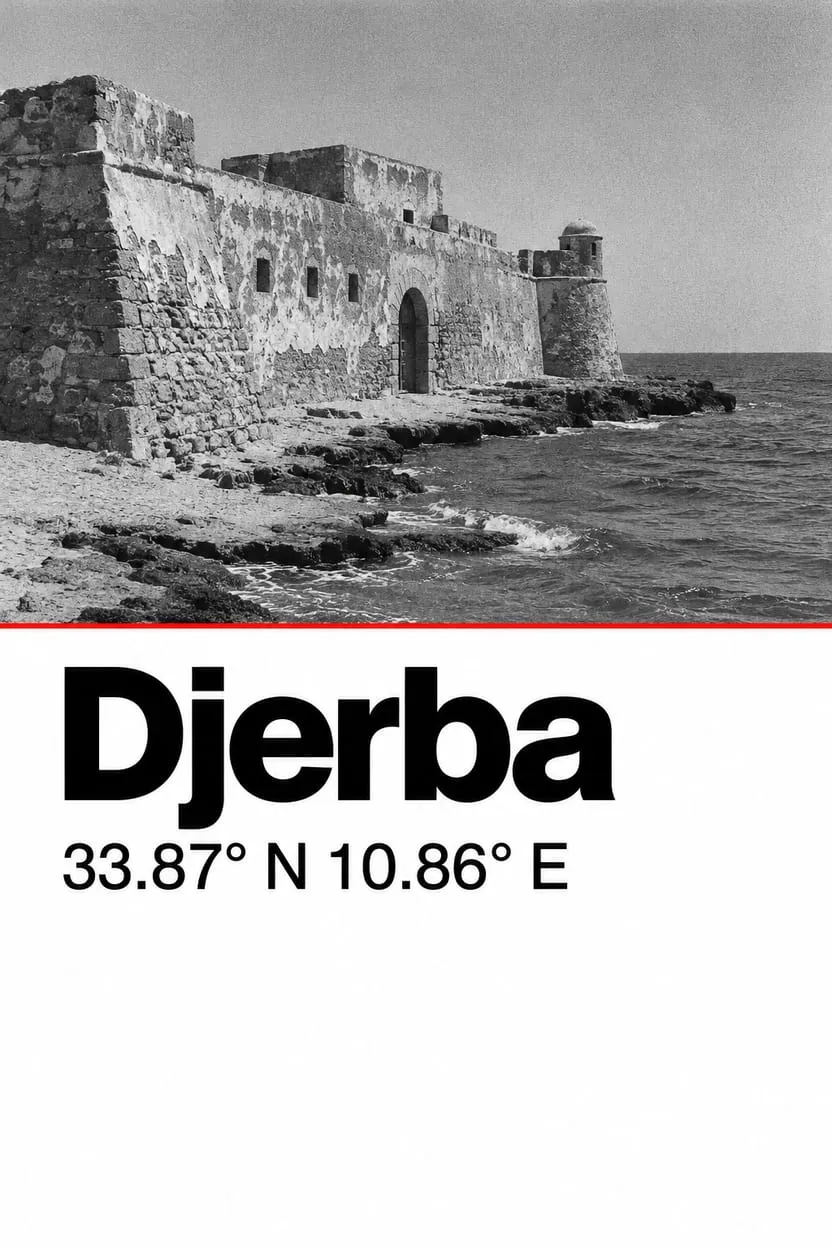
Change the subject, title and small line, then send the whole block as one message. Before you print, compare the lettering with what you typed, including the digits, decimal points, degree signs and compass letters. Check the picture for anything missing or extra.
Subject: an old stone fort beside the sea
Title: "Djerba"
Small line: "33.87° N 10.86° E"

Make one portrait poster, 2:3, as a 1960s Swiss typographic poster with a photograph above and type below.
The only lettering is the title and the small line, exactly as typed.
Colours: black, white and one red.
Picture: the subject as a grainy black-and-white photograph with strong contrast.
Layout: the photograph fills the top half from edge to edge. One thin red rule runs directly below it. The lower half is white. The title sits below the rule in very large, bold sans-serif letters. The small line sits below the title, large enough to read every character. Both lines start at the same left margin.
Finish: flat and matte, with generous white space at the bottom.
The small line is the pair of coordinates from the bottom of this site, including both decimal points and both degree signs.
My first version put “a black and white photograph of” in the Subject line, which is a line you change. Codex pointed out that replacing the subject would then remove the instruction to use a photograph. I moved that instruction to the lines you keep. The loaf at the mouth of the oven takes the place of the fort, and the picture is still in black and white.
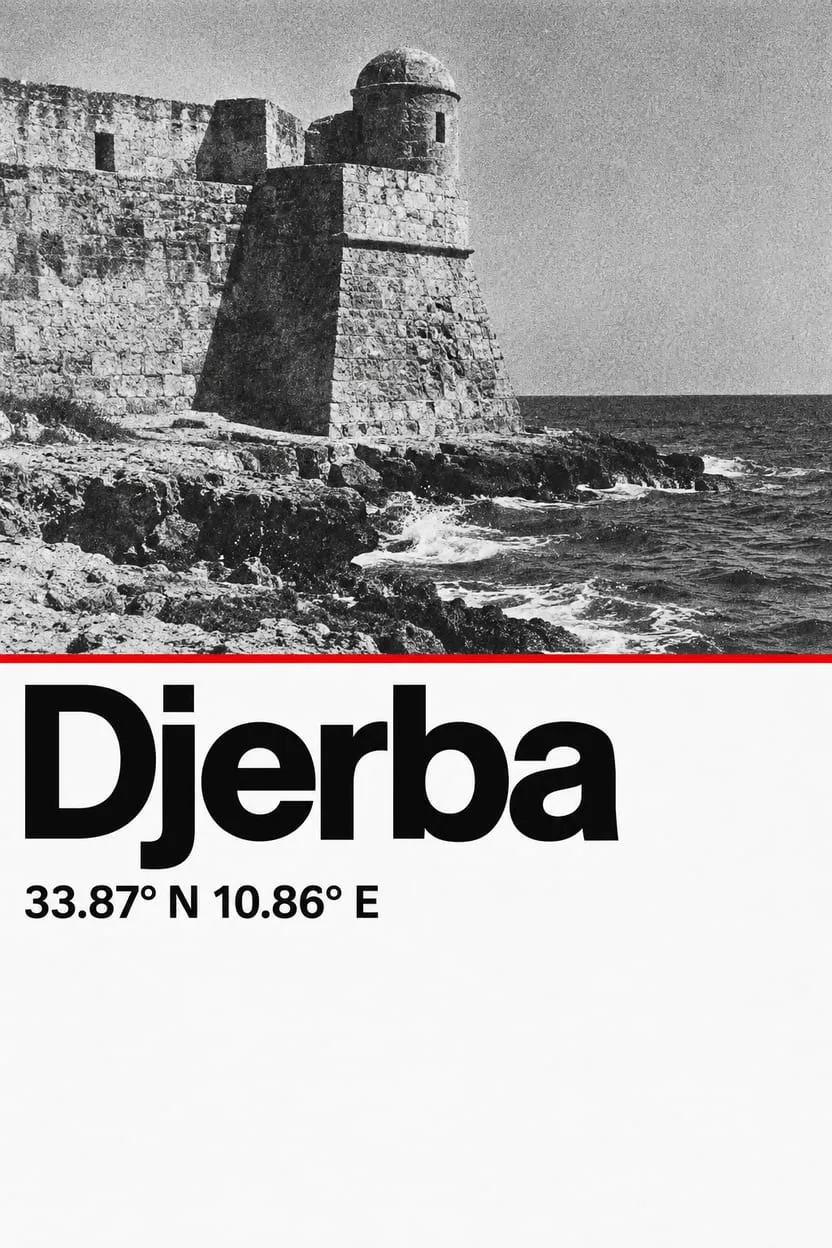
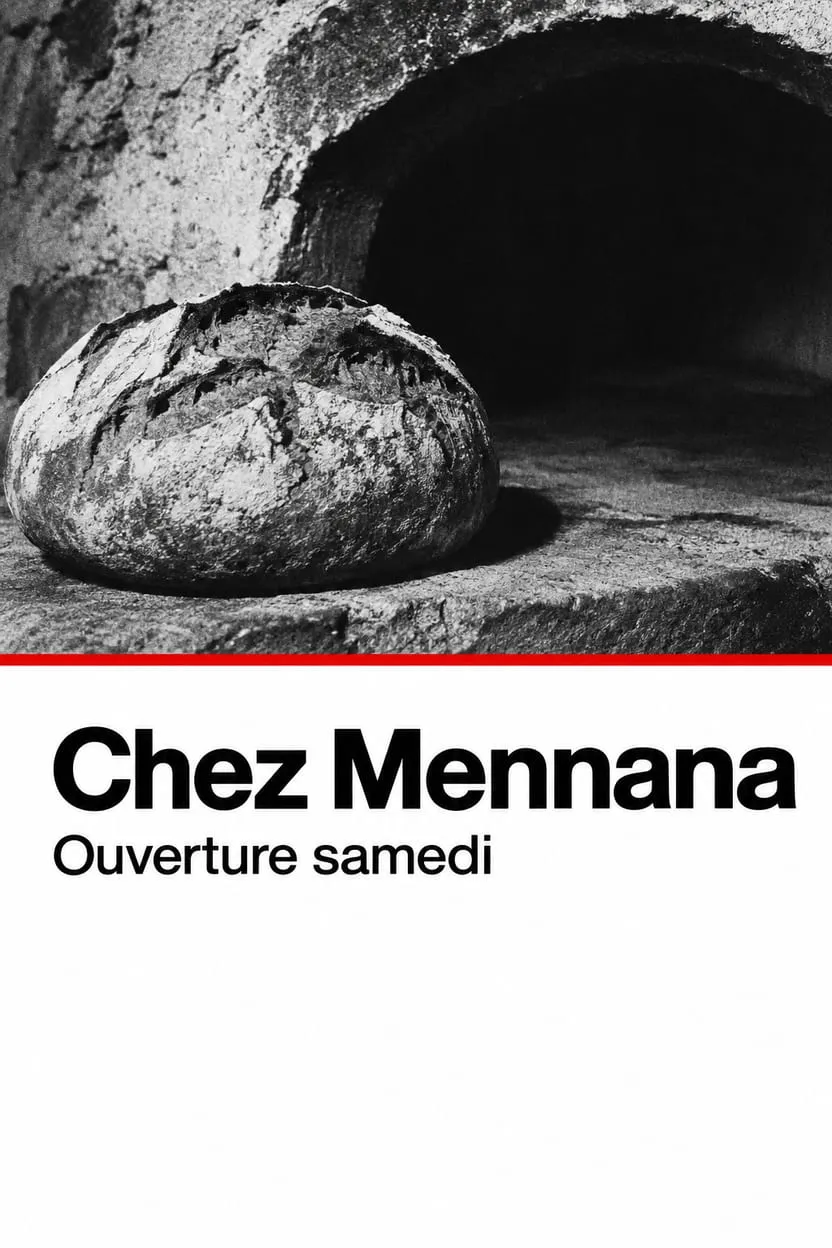
Codex found no errors in the coordinates on either Djerba poster, and the bakery poster kept “Chez Mennana” in upper and lower case, as typed.
This note is part of What changed when I named the poster style, which lists the other nine prompts.
If you’d like help finishing an app or site you built with AI tools, you can book a free one-hour call with me.